
Ask any grounds manager in Singapore or Kuala Lumpur what keeps them up at night and you will hear the same from everybody: water quality and water bills. Across Southeast Asia, landscapes planted with imported ornamentals guzzle irrigation water, demand constant replanting, and tie up maintenance crews that properties can rarely spare.
There is a simpler approach. Native and well-adapted naturalised species, plants that have evolved alongside tropical monsoons, laterite clays, and 90-percent humidity, cut landscape water use by 50 to 60 per cent and slash routine maintenance costs by up to 80 per cent compared with exotic alternatives. Those are not aspirational targets; they are documented results from properties already running water-wise planting programmes.
Below, JJ TurfTech walks through the species that actually perform in this region, the real-world savings they deliver, and a practical transition plan you can start this quarter.
What Are the Best Native Plants for Low-Maintenance Tropical Landscapes?
Species selection will make or break a native landscape project. Get it right and the planting practically runs itself within two seasons. Get it wrong and you are back to weekly interventions. The species below have earned their place on our shortlist after years of field performance across hotel grounds, public parks, and commercial campuses from Bangkok to Bali.
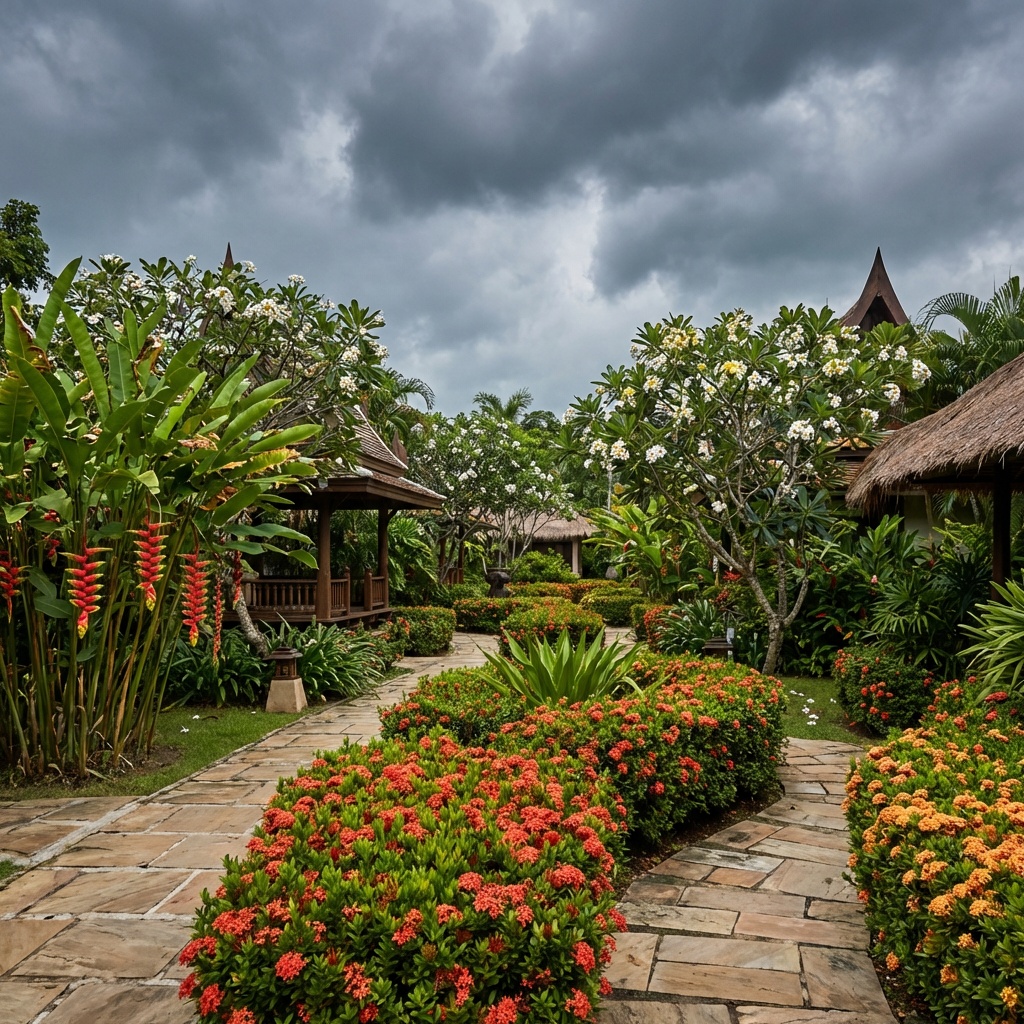
Ixora (Ixora coccinea). If we could put only one shrub on every tropical project, this would be it. Ixora is a true Southeast Asian native that flowers almost continuously in full sun, forming dense, rounded hedges that look established from day one.
We have planted it in the sandy reclaimed soils along East Coast Park and in heavy Johor clay, and it performs in both. Two or three light prunes a year is all it asks: no seasonal replanting, no colour gaps.
Bougainvillea. Not a native in the strict botanical sense (it arrived from South America more than 150 years ago), but it has naturalised so completely across tropical Asia that arguing the point feels academic. You see it blanketing fences from Chiang Mai to Cebu, and for good reason.
Those vivid bracts (magenta, orange, white, purple) keep coming for months with almost no watering once the root system takes hold. It thrives in thin, alkaline, and sandy soils where most ornamentals give up, perfect for coastal resort frontages battling salt spray.
Heliconia. Walk through any five-star resort lobby garden in Bali and you will spot Heliconia within thirty seconds. The lobster-claw flower heads add vertical drama that no other tropical plant quite matches, especially in shaded and semi-shaded zones.
They do want rich organic soil and consistent moisture, so pair them with under-canopy positions, poolside borders, or rain-garden edges where water naturally collects. In the right spot, Heliconia is virtually maintenance-free.
Frangipani (Plumeria). Frangipani gets overlooked in modern planting schemes because it feels old-fashioned. That is a mistake. Few trees deliver the same combination of fragrance, sculptural branching, and near-zero pest management once established.
It is remarkably drought-tolerant, making it a strong specimen tree or poolside accent for resort landscapes. The deciduous habit in drier months adds seasonal rhythm without excessive leaf litter, a practical detail facilities managers appreciate.
Pandanus (Pandan). The unsung hero of coastal landscaping across the region. Those bold, sword-shaped leaves create instant textural contrast in mixed beds, and the coastal varieties are outstanding at stabilising sandy soils and filtering stormwater runoff.
Salt spray, periodic flooding, poor drainage (conditions that send most exotics to the compost heap) barely register with Pandanus. Smaller cultivars also suit urban bioswale and rain-garden planting where space is tight.
Paspalum and native grasses. For turf areas and ground cover, native grass varieties for tropical landscapes outperform imported cool-season grasses on every front: lower water demand, deeper roots, faster recovery from foot traffic.
The EPA Greenacres native landscaping research backs this up: native grasses establish faster root networks, improve soil structure, and cut erosion, all while needing significantly less fertilizer than exotic turf species.
How Much Can Native Landscaping Reduce Water Use and Maintenance Costs?
Fifty to sixty per cent less irrigation water. Up to eighty per cent lower maintenance spend over five years. Those are the numbers the US Environmental Protection Agency documents for landscapes designed around regionally appropriate plants, and they hold up in tropical Southeast Asia, where heat and humidity make over-irrigation even more wasteful.
Maintenance costs drop because native species shrug off local pests and diseases and rely on ambient rainfall rather than scheduled irrigation runs. Mowing, fertilising, pest control, replanting. Every line item shrinks. For a facilities manager running a 20-hectare resort campus or a municipal parks director stretching a tight annual budget, these are not marginal gains.
Smart irrigation multiplies the savings further. Pairing native species with JJ TurfTech’s precision drip-irrigation systems delivers water straight to root zones, eliminating the sprinkler overspray and evaporation losses that waste 30 to 50 per cent of applied water in tropical heat.
Add commercial rotary mowers from JJ TurfTech, which cut cleanly instead of tearing blades, and turf areas retain moisture longer between irrigation cycles, promoting healthier regrowth with fewer inputs. Toro offers a variety of hybrid and battery-powered mowers designed for professional landscaping, commercial grounds, and golf courses, emphasizing reduced emissions, quiet operation, and high-quality cut performance, and most important – massive savings on fuel.
Properties that combine native plantings with smart irrigation in resort landscapes report measurably lower utility bills and reduced labour hours for grounds crews. The savings compound each year as native root systems mature and soil biology strengthens, making the landscape increasingly self-sustaining.
Hospitality groups with multi-property portfolios see the fastest payback because a proven species palette and design template can roll out across sites without starting from scratch each time.
There is also a reporting angle that matters more every year. Many hotel brands now track water-per-guest-night as a core environmental metric. A well-designed native landscape moves that number in the right direction, visibly and measurably, without sacrificing the lush appearance guests expect.
Designing Sustainable Landscapes for Hotels, Parks, and Industrial Campuses
The design principles stay consistent regardless of site type: choose regionally appropriate species, group plants by water need, and weave living infrastructure (bioswales, rain gardens, permeable surfaces) into the layout wherever the site allows.
Hotels and resorts. Guest-facing landscapes need to impress from the moment someone steps out of the car. Mass plantings of Ixora, Bougainvillea, and Frangipani deliver lush arrival sequences, while Paspalum turf gives a premium putting-green finish at a fraction of the irrigation cost of Zoysia for example.
Around pools, Pandanus and Heliconia handle reflected heat and chlorine splash without losing visual appeal, a combination that trips up most imported species.
Parks and public spaces. Municipal parks from Toa Payoh to Chiang Mai are adopting native planting frameworks. Singapore’s Green Plan 2030 targets 80 per cent green cover in public housing estates and one million more trees nationwide by the end of the decade, a policy signal the rest of the region is watching closely.
Native canopy trees paired with low-maintenance ground covers slash municipal mowing budgets and build habitats for pollinators, birds, and beneficial insects that support broader urban ecological health.
Industrial campuses. Factories, logistics hubs, and business parks east of Bangkok or along the Johor-Singapore corridor often have vast perimeter buffer zones that cost a fortune to maintain with conventional turf. Replacing exotic grass with native Paspalum or mixed-native meadow strips halves mowing frequency and eliminates most herbicide applications.
Using pre-emergent herbicides in landscape beds provides highly effective, long-lasting weed prevention by creating a soil barrier that kills weeds before they emerge. This proactive approach saves significant labor, reduces reliance on post-emergent sprays, protects plant health, and keeps beds clean for months with minimal maintenance
LEAF (Leading Environmental Assessment Framework) certification increasingly credits native landscaping as evidence of environmental management, adding tangible value in ESG audits and sustainability disclosures.
Across every site type, building healthy tropical soils is the foundation that holds it all together. Healthy soil means deeper root growth, better water retention, and stronger natural disease suppression, reducing chemical inputs year after year.
How to Start a Native Landscape Transition
You do not need to rip everything out at once. A phased approach works best for most commercial properties and keeps daily operations running smoothly throughout the transition.
- Audit the existing landscape. Map every species, irrigation zone, and maintenance cost line item. This baseline is what you will measure savings against, so get it right.
- Identify high-impact swap zones. Target the areas bleeding the most water or racking up the highest maintenance bills first: usually large turf expanses and ornamental beds full of exotic annuals that need replanting every season.
- Select proven native and naturalised species. Match plants to each microclimate and soil type on site. Sandy reclaimed land along the coast needs a different palette than heavy clay inland. Draw on local botanical references and field-tested cultivar data.
- Upgrade irrigation to drip or micro-spray. Fit smart controllers with soil-moisture sensors so the system backs off automatically during monsoon months instead of dumping water onto already-saturated ground.
- Monitor and adjust through the first two growing seasons. Track water use, plant establishment rates, and maintenance hours. Once the data confirms performance, scale the programme across the full property.
JJ TurfTech supports this transition end to end: site assessment, species selection, turf supply, irrigation installation, and ongoing maintenance. Our landscape and parks solutions cover every project scale, from a boutique hotel garden in Phuket to a 50-hectare industrial estate outside Jakarta.
Get Started with Native Landscaping
Ready to cut water costs, reduce maintenance hours, and build a landscape that improves with age? Request a free sustainability consultation and our team will develop a native planting plan tailored to your property, climate zone, and budget.
SOURCES
- EPA Greenacres: native landscape costs and benefits: https://archive.epa.gov/greenacres/web/html/chap2.html
- Singapore Green Plan 2030: City in Nature: https://www.greenplan.gov.sg/key-focus-areas/city-in-nature/
- Smart irrigation for resort landscapes: https://conservelandcare.com/luxury-resort-landscaping/
- Soil health in tropical landscaping. JJ TurfTech: https://turftech.jjsea.com/blog/importance-soil-health-tropical-landscaping/